United States
Apology and Acknowledgement
The 2009 Native American Apology Resolution is a formal acknowledgment and apology for their maltreatment, violence, and broken treaties with Native American tribes. The Congress apologizes on behalf of the United States people and aims to build a positive relationship to move towards a brighter future, where everyone can live on this land in harmony. This resolution also pushes state governments to begin reconciliation efforts with Native American tribes that are residing within their state borders. Although this is an official apology admitting their wrongdoings in the past, it specifically states that this can’t be used to support or settle any legal claims against the United States.
Indian Reorganization Act
The Indian Reorganization Act, passed in 1934 during the New Deal era, was a law aimed at decreasing federal control of Native American affairs and increasing their self-government and responsibility. The law encouraged tribes to rebuild their governments, adopt written constitutions, and manage their own resources. This law also provided financial assistance towards land purchases, education, and economic development. The passing of this act marked the beginning of the U.S. government recognizing the importance of preserving and supporting Native American cultures and tribal sovereignty.
This peacebuilding method of passing acts that benefit a marginalized group was effective as it was a step towards mending relationships between the U.S. and Native American tribes. After years of laws aimed towards assimilating the Native American population while controlling them through ineffective laws and policies, the act represented a new perception by the U.S. government. By encouraging and promoting self-governance, supporting Native American cultures, and funding developments, the act promoted cooperation while giving the tribes more authority over their own land and communities.
Land Back
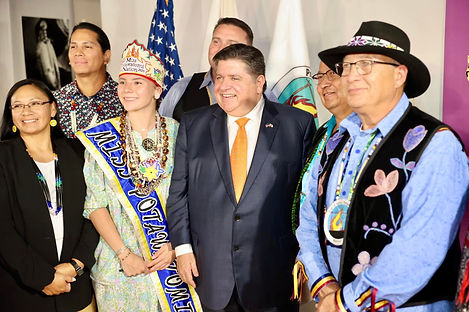
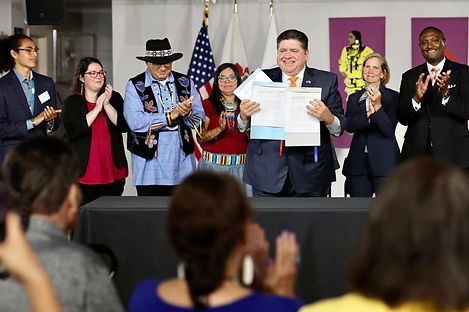
In March 2025, Governor JB Pritzker officially signed legislation giving the Prairie Band Potawatomi Nation back their land. The 1833 Treaty of Chicago, in which the Potawatami, Chippewa, and Ottawa tribes ceded 5 million acres of their land in exchange for land west of the Mississippi, did not include the 1280 acres granted to Chief Shab-eh-nay. Later on, when Chief Shab-eh-nay visited the rest of the tribes in Kansas, when he returned, he found that his land was taken over by the Illinois Land General Office and sold to the public as they declared it “abandoned”. After many years of trying to get back his land, as Congress never officially authorized the sale, the land was finally given back, making it the first official reservation in Illinois.
Peacebuilding is proven effective when there is a strong legal legitimacy. In this case, as the Congress did not authorize the land sale, the restitution of the land is both a symbolic and a legally obligatory act. This action of giving back the land can be viewed as a correction of a wrongdoing, which improves the government’s legitimacy.